
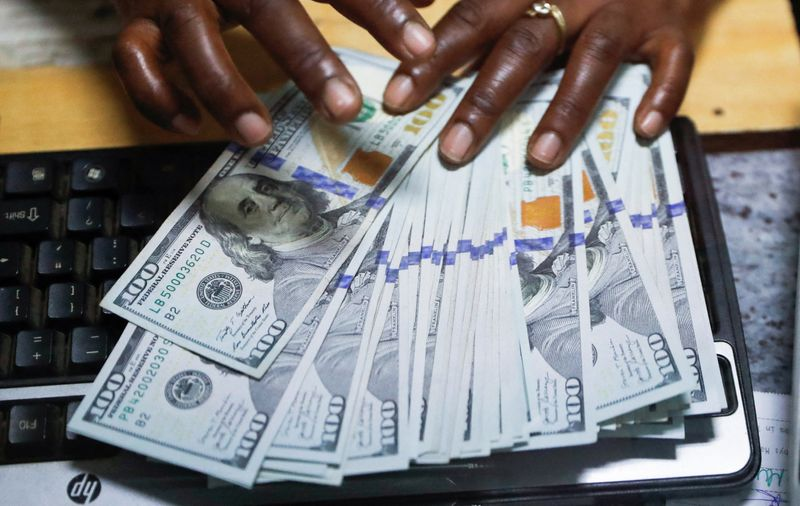
The US dollar stabilized on Friday, but is still poised for a third straight weekly decline after the Federal Reserve cut interest rates earlier this week, sending borrowing costs to a near three-year low.
At 9:00 AM MT, the dollar index, which tracks the greenback against a basket of six other currencies, was trading virtually unchanged at 97.995, but was poised for a weekly decline of 0.7%.
The index has fallen more than 9% this year and is on track for its sharpest annual drop since 2017.
Dollar Falls After Fed Meeting
The US central bank cut interest rates by 25 basis points this week, as expected, but Chairman Jerome Powell’s remarks at his post-meeting press conference were more measured and less hawkish than many expected. Fed policymakers are also forecasting another rate cut next year, even though central bankers have shown disagreement over the December move.
“Bearish winds are blowing not only from interest rates but also from year-end seasonality,” ING analysts wrote in a note. “Dollar rates have seen another downward calibration of Fed expectations, with 2-year notes falling to 3.50% and the market pricing 3.05% as the final Fed rate at the end of next year, continuing to weigh on the US dollar.”
Going forward, the focus will be on economic data, which is still lagging behind the effects of the 43-day federal government shutdown in October and November, as well as the identity of the next Fed chair.
ING: Euro Undervalued Against Dollar
In Europe, GBP/USD fell 0.1% to 1.3383, retreating from its highest level since October after data showed the UK economy unexpectedly contracted in October, with uncertainty ahead of Chancellor Rachel Reeves’ autumn budget likely to limit growth.
Data released earlier on Friday by the Office for National Statistics showed that UK gross domestic product fell 0.1% month-on-month in October, in line with the previous month’s decline and below expectations for a 0.1% rise.
The Bank of England will hold its final policy meeting of the year next week, and is widely expected to cut interest rates by a quarter point to 3.75% as recent data showed inflation has eased.
EUR/USD edged down slightly to 1.1736, but the single currency was poised to post a weekly gain of 0.8%, marking its third consecutive weekly gain.
German inflation rose to 2.6% in November, confirming preliminary data, while consumer prices, adjusted for comparison with other European Union countries, were 2.3% year-on-year in October.
“Following this week’s Fed meeting, market attention will turn to next Thursday’s ECB meeting. President Christine Lagarde will present a new forecast, which should be the first test of the current pricing policy’s lack of further rate cuts, consistent with our view,” ING added.
BoJ Looming on the Horizon
In Asia, USD/JPY rose 0.1% to 155.73, while the yen softened slightly ahead of next week’s Bank of Japan meeting, where a rate hike is widely expected.
Market attention is focused on policymakers’ comments on the path of Japanese interest rates in 2026.
USD/CNY traded 0.1% lower at 7.0556, while AUD/USD rose 0.1% to 0.6673, poised for a weekly gain of 0.5% as lingering inflationary pressures suggest the Reserve Bank of Australia may raise rates in the near term.