
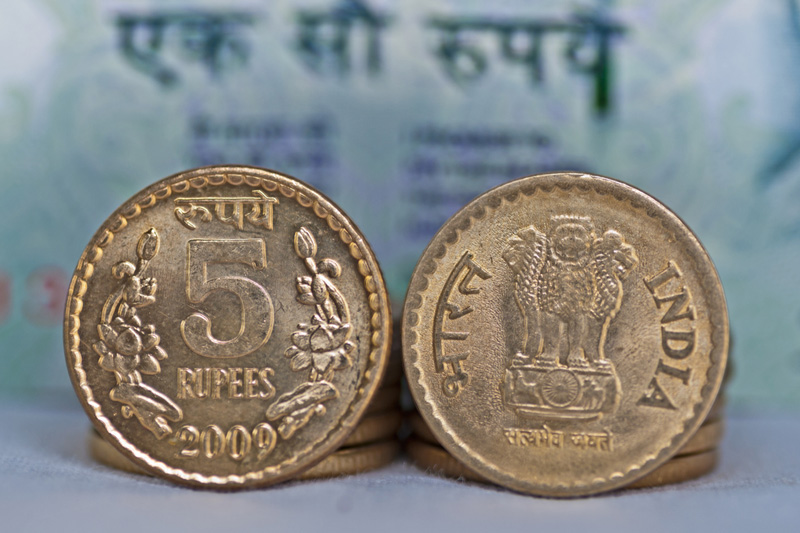
Most Asian currencies remained steady on Friday as traders assessed the Federal Reserve’s outlook for next year following its latest rate cut, while the Indian rupee fell to new record lows amid sustained capital outflows.
The USD index was muted but remained on track for a third consecutive weekly decline as investors weighed how many Fed rate cuts might materialize in 2026 following Wednesday’s decision.
Indian rupee hits new record low
In India, the rupee weakened again, breaking above 90 per dollar, hitting new record lows.
The USD/INR pair was last trading 0.3% higher at 90.55 rupees, eclipsing the previous day’s record low of 90.48 rupees.
The currency was pressured by persistent outflows of foreign portfolio investment, aggressive dollar buying by domestic corporations, and uncertainty surrounding the US-India trade deal.
The lack of a breakthrough in tariff talks has investors cautious, adding to pressure on the currency, even though the Reserve Bank of India has been seen intervening to curb excessive volatility.
Traders weigh Fed outlook after rate cut
The Federal Reserve cut its benchmark interest rate by 25 basis points on Wednesday, sending borrowing costs to a near three-year low.
The decision came with three objections, reflecting a growing rift among policymakers over the pace of future easing. Updated economic forecasts showed policymakers expecting just one rate cut in 2026, a more conservative view than markets had anticipated.
Chairman Jerome Powell said the central bank would remain data-driven and emphasized ongoing uncertainty about labor market cooling and inflation trends.
New U.S. labor market data released Thursday complicated the outlook. Initial jobless claims jumped 44,000 to 236,000, the largest weekly increase in nearly four and a half years.
This jump is partly explained by seasonal adjustment distortions, but the figures raised questions about the sustainability of labor market strength as the Fed charts its next steps.
Back in Asia, the USD/JPY pair rose 0.1%, while the USD/SGD pair was flat.
The South Korean won (USD/KRW) also rose 0.1%, while the Chinese yuan (USD/CNY) was little changed.
The Australian dollar (AUD/USD) fell 0.1%.